
Introduction:
Odoo has announced a new module in her latest software release: Odoo Equity, intended to make ownership management a native feature in the Odoo ERP suite.
Currently, equity is oftenly tracked via spreadsheets, email chains or other disconnected financial tools. As organizations scale up and brings in multiple shareholders, those rudimentary methods become time‑consuming, error‑prone, and inaccurate.
Functionalities of Odoo equity
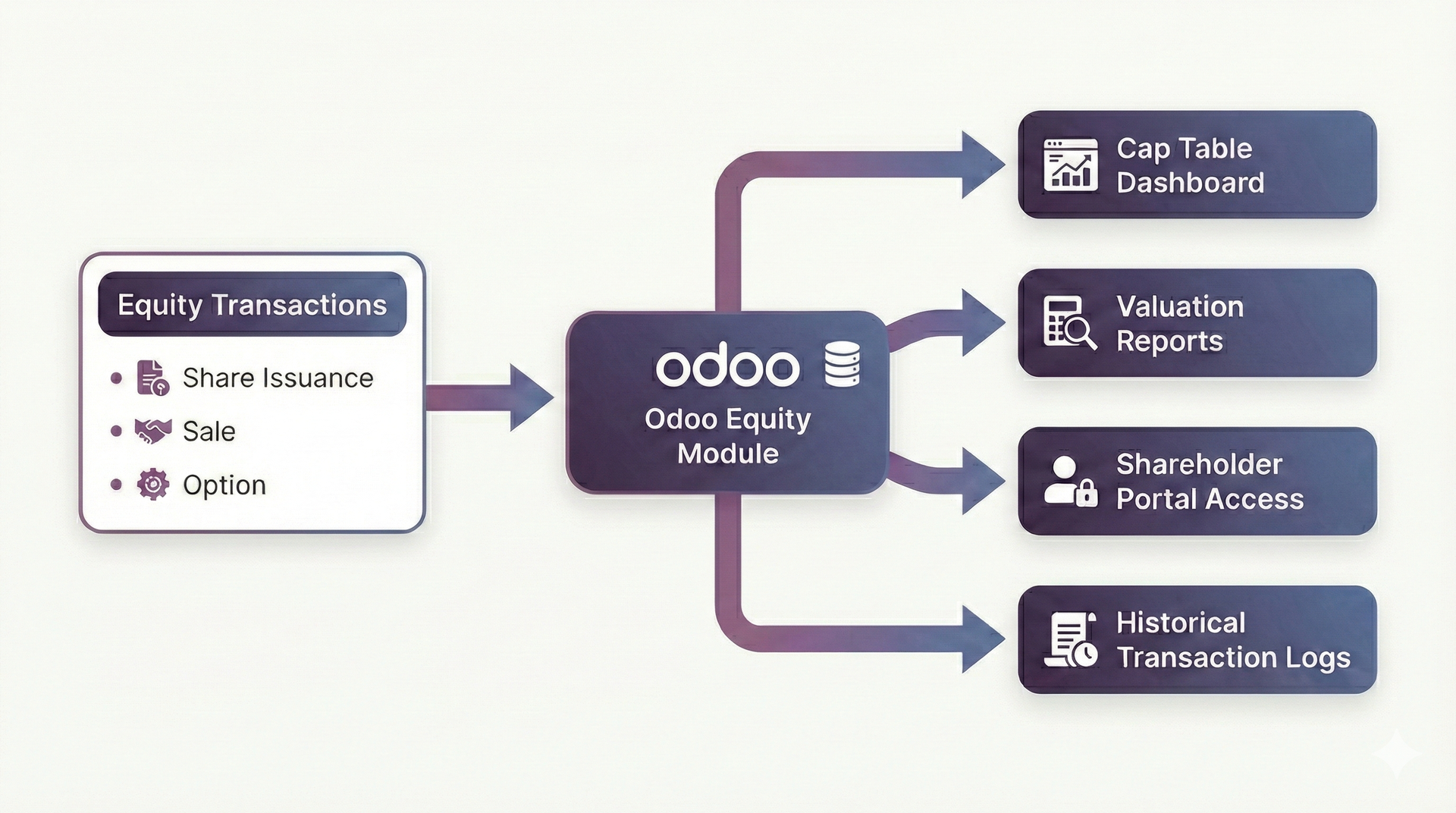
Odoo Equity is integrating in its ERP Suite the following new features:
- Integrated shareholder registers,
- Automated cap table generation,
- Real‑time ownership dashboards & valuation tracking,
- Management of transactions like share sales or options,
- Role‑based access for shareholders via portal tab
Who can benefit from this module?:
- Startups & scale‑ups: Frequent funding rounds and investor reporting make real‑time cap table updates essential.
- Investors & shareholders: A portal tab gives them direct access to their current investment position and history
- Companies with ESOP's (Employee Stock Ownership Plan): HR and finance can manage instruments like options and grants together with payroll workflows.
- SME's with multiple owners: Even small, privately held businesses benefit from clarity and auditability.
Context: What is equity accounting?
In standard accounting terms, equity is the residual interest in assets after deducting liabilities. Typically comprised of shareholders’ capital and retained earnings. The new Equity module will pull this one layer higher, offering ownership‑level tracking (not just financial reporting)
Conclusion:
Odoo Equity extends the functionality of ERP with ownership management. It is a forward‑looking move that bridges finance, HR, and governance within one unified system.
If equity tracking, investor communication, or ownership transparency are pain points for your clients or your own business, this module is one to watch.